




In September 2026, a new and as yet legally undefined category—the concept of “associate membership”—emerged in relations between the European Union and Canada. In her State of the Union address on 16 September 2026, European Commission President Ursula von der Leyen proposed that Canada become the EU’s first “associate member” and that the Comprehensive ...
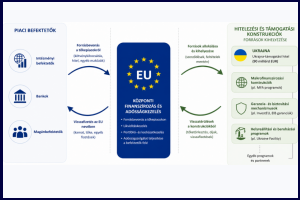
In recent years, the European Union has supported Ukraine through a series of interlinked financing instruments aimed at maintaining macroeconomic stability and ensuring the functioning of the state. As a next step, the Union has established a €90 billion Ukraine support loan facility for the period 2026–2027, which, beyond sustaining these objectives, is also intended to address longer-term ...

In its judgment delivered on 21 April 2026, the Court of Justice of the European Union, in Case C-769/22, Commission v Hungary, reached conclusions whose significance extends well beyond the successful challenge brought by the European Commission against the restrictions imposed by Hungary’s 2021 “child protection” law on LGBTIQ-related content. The decision is of landmark importance ...

In the short term, the new directions of Hungarian European policy are primarily organized around a few policy areas requiring immediate adaptation: compliance with the conditions for access to EU funds; the reform of migration policy and the termination of the resulting daily fine of one million euros; and participation in EU policies related to Ukraine, within the framework of financing mechanisms ...


In Case C-225/24 before the Court of Justice of the European Union—brought by the European Parliament against the European Commission—the Opinion of the Advocate General can be regarded as a milestone in the development of the Union’s rule-of-law framework. In her Opinion delivered on 12 February 2026 (Ćapeta, 2026), Advocate General Tamara Ćapeta proposed that the Court ...
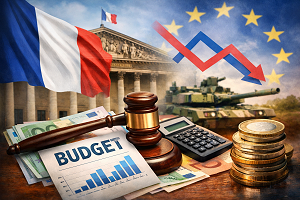
After several months of debate and significant delay, the parliamentary deliberations on France’s 2026 budget concluded on 2 February 2026. The government ultimately secured adoption of the budget by invoking Article 49(3) of the Constitution, a provision that allows legislation to enter into force without a parliamentary vote, provided that the National Assembly does not adopt a motion of ...
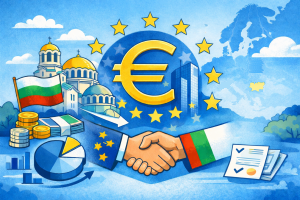
Bulgaria’s euro area accession on 1 January 2026 is simultaneously a milestone of monetary integration and a political signal: it indicates that euro area enlargement, beyond quantitative convergence, has increasingly become an instrument of EU economic governance and Eastern stabilisation policy. The sovereign debt and banking crises of the 2010s—especially in Southern European ...
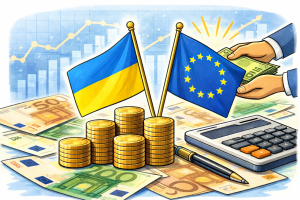
Since Russia’s 2022 invasion, the European Union has provided Ukraine with financial support on an unprecedented scale. Whereas the EU budget could not previously borrow (with expenditures and revenues balanced each year), the COVID-19 crisis and the war in Ukraine made it necessary to develop common EU borrowing mechanisms. As a result, the EU now issues large volumes of common bonds to ...
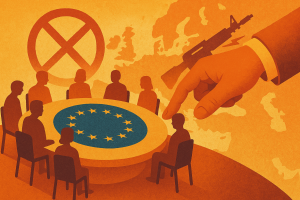
In the European Union’s Common Foreign and Security Policy (CFSP), the traditionally prevailing principle of unanimity in decision-making has increasingly proven to be an impediment. One example is the issue of using frozen Russian state assets to assist Ukraine. The majority of Member States support the idea, but during the debates several have indicated opposing positions. In December 2025, ...

In France – as in other European states – an increasing amount of fake news circulates on social media and in press outlets. Fake news not only misinforms, but systematically and deliberately undermines social stability (IFOP, 2018). On 28 November 2025, at a forum held for readers of the regional newspaper group EBRA in Mirecourt, Vosges, French President Emmanuel Macron proposed that, ...

The public standing of the British Labour Party had deteriorated markedly by autumn 2025, barely more than a year after its historic general election victory. In parallel, the popularity of the Prime Minister, Keir Starmer, has fallen to a historic low (Opinium, 2025), while the advance of the populist Reform UK party has been striking across the country. The analysis below examines the economic ...

On 3 November 2025, King Charles III of the United Kingdom, by open letters patent, deprived his brother Andrew of the dignity of “prince” and of the style “His Royal Highness” (HRH). A few days earlier, by royal warrant, he had instructed the Lord Chancellor to delete the title “Duke of York” from the official Roll of the Peerage

The debate over France’s 2025 and 2026 budget has already brought down three governments. With parliament deadlocked, some talk of an institutional crisis and even predict a collapsing political system. As in every year since 1974, the budget is not balanced: in 2024 the public deficit was 5.8% of GDP (€169.6 billion) and public debt stood at 113% of GDP (about €3.305 trillion). ...

Russia’s aggression launched on 24 February 2022 against Ukraine has fundamentally called into question the European security order and has forced the sanctioning coalition to search for new solutions in normative, legal and financial terms.
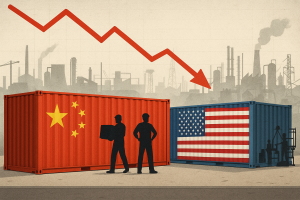
Tariffs are not beneficial to either the American or the European economy. The US import duties imposed on steel and aluminium products and on vehicles may drastically affect the European – and particularly the German – economy, as Germany is one of the largest exporters of goods and vehicles to overseas markets.